Moving Beyond the Single-Plant Bottleneck
Procurement teams initially attempted to secure supply by splitting volumes between two adjacent Belgian plants. The logic appeared sound on paper. Splitting the tooling across two facilities just miles apart promised redundancy without the complexity of cross-border logistics. Localized labor stoppages affecting the entire industrial park rendered that strategy useless. A strike at the gates halted trucks for both facilities simultaneously, starving the fillers of rigid trays within days.
The solution required distributing the production grid across distinct labor and logistics markets. Establishing a network across Belgium, Poland, and Germany ensures that a regional disruption cannot halt the entire packaging flow. Intra-EU goods movement makes this split production practical. A localized resin shortage or a regional power curtailment in one country leaves the other two nodes operational.
Continuity, lead-time stretch, and shock cover rest on four specific moves. Supply chain managers must build precise capability maps, execute dual qualification, establish corridor buffers, and define pre-agreed contingency runs. Single-plant fires and labor stoppages taught FMCG buyers that a cheap unit price from one hall fails to constitute a resilient supply plan. Establishing a fully qualified three-country grid takes, in our experience, roughly 14 to 18 months. That timeline reflects the engineering reality of matching thermoforming and injection-moulding outputs across different climates, equipment brands, and operating cultures.
Mapping True Twin Capabilities Across Borders
Building a resilient network starts with a like-for-like map per SKU. This requires documenting the exact process, whether thermoform, injection, blow, or film extrusion. The map must detail the resin family, cavity and tool family, decoration requirements, secondary packaging, and clean-room or food-contact status. A German subsidiary like Miko-Hordijk Verpackungen GmbH might run a specific ISO 9001 certified clean-room protocol that a sister site handles differently.
Country differences operate as process facts rather than mere flags on a map. The labor mix, mould-shop depth, port access, and typical run-length economics differ across the three markets. A facility near a major port might absorb inbound resin delays better than a landlocked plant. Changeover times, customarily near 4 to 9 hours depending on tool complexity, dictate how quickly a site can pivot to cover a sister plant's shortfall.

Distinguishing a true twin Polish hall holding identical wall-thickness tolerances of ±0.05 mm to ±0.08 mm from a near-twin requiring complete redesign is a critical engineering gate. A true twin can accept the transferred tool and produce a tray that denests flawlessly on the customer's filling line. A near-twin that only matches outer dimensions will cause jams at the filler. If the wall thickness varies, the stacking pitch changes. When the stacking pitch changes, the automated denester fails.
Parallel Qualification While the Incumbent Ships
Qualifying a second converter must never disrupt the primary supply. The engineering team must sequence the Installation Qualification (IQ), Operational Qualification (OQ), and Performance Qualification (PQ) so the incumbent Belgian or German line keeps shipping. The sister site runs parallel samples on locked specifications.
Quality managers decided to lock the master drawing and resin grade specifications before initiating the sister-site trial. Freezing the color standard, torque, leak, seal tests, and artwork upfront prevents the common trap of adjusting tolerances post-failure. The parallel samples must match the exact baseline of the active production. On a typical engagement the parallel sampling window runs about 30 to 45 days. This duration allows for proper conditioning of the samples and rigorous testing across multiple shifts.
Standardizing Three-Way Metrology
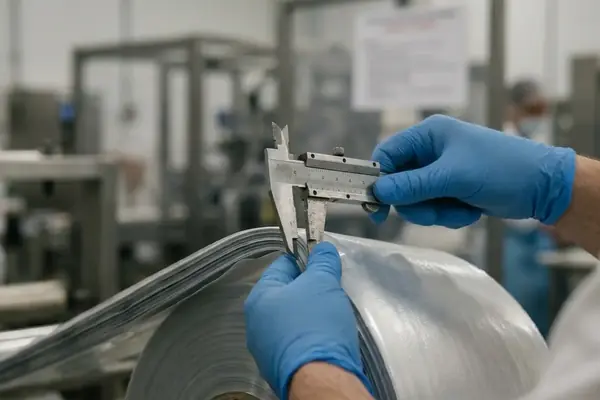
Confining the three-way metrology comparison strictly to incumbent production, sister-site pilot, and retained samples without introducing third-party testing variables maintains data integrity. Using the same metrology method and equipment at each plant eliminates measurement bias. If the Belgian plant uses a specific vision system to measure flange width, the Polish plant must use the identical setup. Discrepancies often stem from different calibration routines rather than actual dimensional faults.
Structuring Corridors and Buffer Stocks
Physical lanes dictate the rhythm of a multi-site grid. Supply planners must map the road corridors between the three countries, the port-fed inbound resin routes, and the last-mile delivery into the filler. Understanding these physical constraints allows for accurate lead-time calculations. Per usual scope, road transit between the Silesian and German facilities runs 12 to 16 hours. This transit window becomes the baseline for any emergency response plan.
Buffer policy depends entirely on SKU criticality. The standard approach places a safety stock of finished packaging near the filler, supplemented by a smaller tool-ready resin buffer at the backup hall. This ensures the filler has immediate material while the backup plant initiates the contingency run. Note that this buffer strategy applies exclusively to rigid and semi-rigid thermoformed trays; flexible films requiring strict humidity controls below 45% RH demand climate-controlled transit rather than static warehousing.
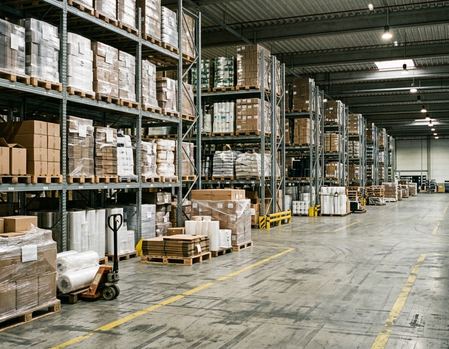
The physical handoff requires precise documentation. Contracts must define the Incoterms, pallet pattern, and stretch-wrap specifications. Humidity and temperature limits for films must be explicitly stated on the transport order. Knowing exactly who owns the customs paperwork on a Friday night prevents a truck from sitting at a border crossing while the filler runs out of material.
Executing the Contingency Run
Switching production when a site goes offline demands rigorous preparation. The network must pre-position duplicate or transferable tooling and document all process settings. The protocol activates within a 4- to 6-hour window of the initial downtime trigger. This trigger could be a mechanical failure, a force majeure event, or a critical quality hold.
A second plant lacking a mould, resin approval, and a trained night shift functions only as a brochure. True contingency requires immediate operational readiness. The backup facility must have the raw materials on the floor and the operators trained on the specific tool. The setup sheets must be translated and verified.
The filler’s incoming inspection remains identical regardless of the origin plant. A Polish-made lot must pass a German-trained AQL habit. The standard dictates AQL 1.5 for major defects and AQL 4.0 for minor defects. If the backup plant cannot meet these exact thresholds on the first contingency run, the dual-source strategy has failed its primary objective.
Locking Down Change Control and Genealogy
Change control maintains the integrity of the three-country grid. Quality agreements must require a 72-hour written notice for any proposed masterbatch or mould steel swap at any of the three sites. A localized decision to trial a new slip agent in Germany can cause sealing failures at a filler in France. Every material change requires a re-PQ gate to verify performance.
Lot genealogy must survive a site switch. The label must display the resin batch, cavity ID, shift, and ship-to filler in one standardized language. When a defect occurs, the brand's quality manager needs to trace the exact origin instantly. Audit rights and complaint routing must be centralized. A quality manager at the brand should chase one quality desk for a dented tray, rather than navigating three different corporate structures.
Compliance tracking also spans borders. Aligning with EU rules on packaging and packaging waste requires uniform reporting across the grid. If the Belgian plant updates its recycled content documentation, the Polish and German sites must mirror that data structure for the same SKU.
Dual-Source Qualification Readiness
- Master drawing and artwork frozen across all three sites
- Resin grade and masterbatch specifications locked
- IQ/OQ/PQ protocols aligned between incumbent and sister sites
- Metrology methods and equipment standardized
A Silesian Night Shift in Practice
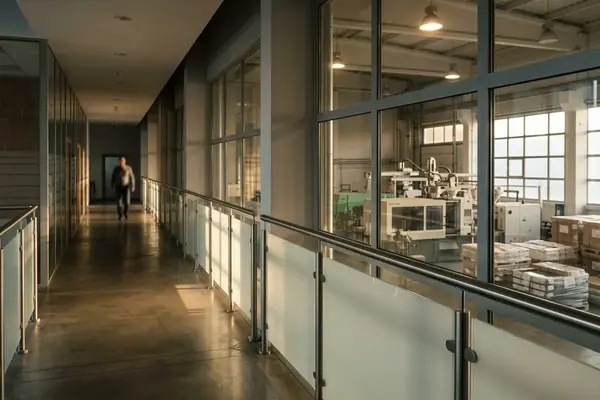
The overhead lights in the Silesian thermoforming hall reflect off the polished concrete as the night-shift supervisor answers the radio. A Belgian press has gone down hard, past the four-hour recovery window. The supervisor walks past the active lines to a dedicated racking system, pulling a pre-qualified tray SKU tool set. The paperwork sits ready on the setup bench: the frozen specification sheet, the approved color plaque, and the dimensional report from the last PQ lot. Outside, a logistics coordinator confirms a trailer is already booked on the established corridor toward the filler. The tool drops into the press, the pre-approved resin feeds into the hopper, and the first shots match the retained samples perfectly.