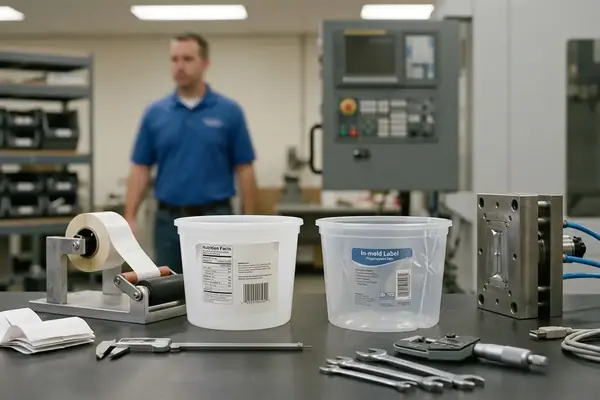
When the Filler Stopped Mid-Shift
A high-speed dairy filler halts during a peak production run. The rotary filler operates at 120- to 140-cup-per-minute speeds, demanding absolute precision from every component entering the sterile zone. A single plastic cup fails to seat cleanly at the infeed star wheel. The machine registers a mechanical fault and immediately stops the line to prevent a cascade of crushed plastic and spilled product. Operators rush to the enclosure, clear the jammed cup, reset the fault logic, and restart the sequence. These 3- to 5-second micro-stops, occurring roughly 18 to 24 times per shift, destroy daily throughput targets.
The compounding effect of these brief interruptions extends beyond lost units. Each stop disrupts the thermal equilibrium of the sealing heads and introduces a slight risk to the sterile environment. Maintenance technicians often spend hours adjusting timing screws and vacuum grippers, assuming the machinery has drifted out of alignment. The root cause rarely lies in the filler itself.
Primary packaging dictates machine reliability. Three specific levers control this mechanical interaction: the dimensional consistency of the primary pack, the pallet configuration feeding into the depalletiser, and the defect data exchange between the packaging supplier and the filling site. Stoppages fell sharply once these three levers were treated as one integrated system rather than isolated quality tickets.
What the Dairy Line Was Losing to Packaging Variability
High-volume dairy filling relies on continuous automated infeed mechanisms and highly synchronized transfer points. Production schedules leave no room for extended troubleshooting. Changeover windows remain restricted to 45-55 minutes between flavor runs. During this brief period, operators must execute clean-in-place protocols, flush the dosing nozzles, load new packaging materials, and bring the sealing temperatures back to operational setpoints. There is zero tolerance for pack-to-pack drift once the line resumes.
When dimensional variability enters the supply chain, the disruption pattern becomes highly predictable. Intermittent jams plague the infeed rails as cups fail to separate cleanly from the stack. Mis-picks occur at the depalletising station when the vacuum head encounters an uneven layer pad. Operators face micro-stops they cannot trace to a single SKU batch, leading to frustration on the floor. Scrap rates climb to something like 12 to 15 cups per jam event at the depalletiser transfer plate, as the automated sweep clears the entire immediate area to reset the sequence.
The situation forces a critical operational decision. Reactive scrap and constant line calls mask a fundamental packaging-specification problem. Maintenance teams attempt to compensate by widening rail tolerances or increasing vacuum pressure, but this constant tweaking degrades the baseline machine setup. The filling line loses capacity to packaging variability long before a major mechanical failure occurs. Addressing the root cause requires moving upstream to the thermoforming and injection-moulding processes.
Tightening Dimensional Consistency Before the Filler
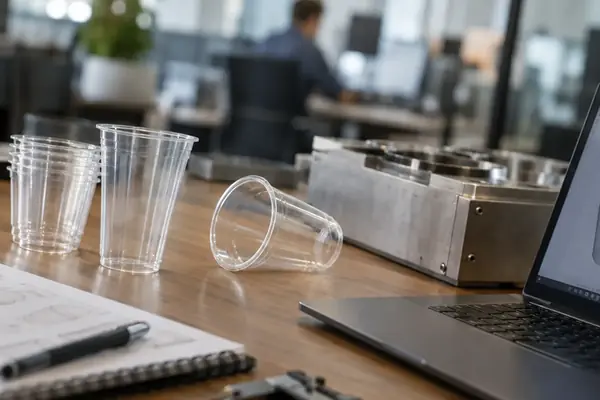
Automated grippers, rails, and sealing heads punish minute deviations in neck finish, rim height, base stability, and wall stiffness. A cup that looks perfect to the human eye can easily trigger a sensor fault if the denesting lugs are formed a fraction of a millimeter out of specification. Engineering teams initially focused on overall cup height to solve the recurring infeed jams. High-speed camera analysis revealed the sealing heads were actually catching on the rim flange angle.
Generic +/- 0.5mm height tolerances failing to prevent flange-angle jams at the sealing head demonstrated the need for tighter controls. The critical-to-function dimension required a strict flange angle variance limit of roughly 0.2 to 0.3 degrees. Production sites must align their sampling protocols to these specific line-sensitive features rather than relying on broad volumetric measurements.
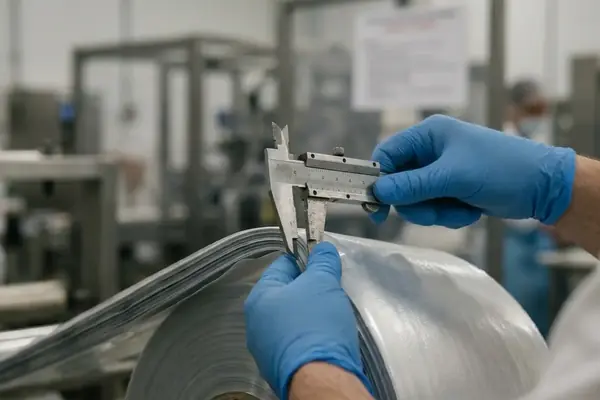
Cavity-to-cavity checks became mandated every 4 to 6 hours during production. Quality technicians measure the flange angle from every single cavity in the forming tool to ensure uniform polymer distribution. Hold criteria tie directly to specific jam modes observed on the dairy line. Process controls at the packaging plant require strict adherence to ISO 9001 standards, ensuring that every measurement is documented and traceable.
Tooling wear watchpoints monitor the degradation of cutting edges and forming plugs. As a thermoforming tool cycles millions of times, the cutting matrix slowly dulls, which can introduce microscopic burrs on the cup rim. Lot release protocols flag this dimensional drift before the pallets ever reach the dispatch bay. Facilities like the Miko-Hordijk Verpackungen GmbH German subsidiary rely on these rigorous cavity-level checks to maintain consistency across multi-million unit runs, ensuring the dairy filler receives identical geometry in every sleeve.
Pallet Configuration Reviews That Protected Line Flow
Unit-load design dictates depalletising reliability just as much as cup geometry dictates infeed success. Layer patterns, interlock strength, slip-sheet choice, and stack height either stabilize or stress empty packs in transit. The logistics team initially proposed a 14-layer high-density pallet pattern to maximize truck fill rates and reduce freight costs. Transit trials showed the bottom three layers suffered severe deformation.
Measurements recorded around 1.2mm to 1.8mm of ovalization on the bottom layers under static load. High-density 14-layer pallets causing bottom-layer ovalization that disrupts automated depalletising highlighted the conflict between freight efficiency and line performance. The continuous static pressure, combined with the vibration of road transport and fluctuating warehouse temperatures, forced the bottom cups out of round. When these ovalized cups reached the depalletiser, the vacuum heads could not establish a secure seal, leading to dropped sleeves and immediate line faults.
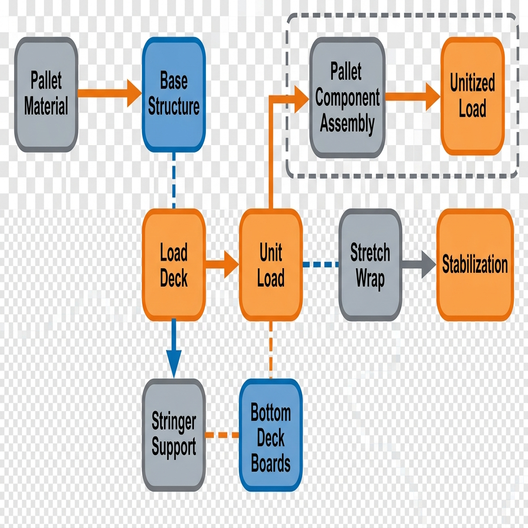
The operation switched to an 11-layer pallet configuration using 3mm corrugated slip-sheets. Joint reviews require walking the path from the warehouse to the depalletiser with both packaging and site teams. Engineers redesign patterns that crush rims, nest unevenly, or present packs out of orientation. The corrugated slip-sheets distribute the vertical load evenly across the cup rims, preventing the localized pressure points that cause ovalization.
The trade-off between cube utilization and line-ready presentation heavily favors the latter. The dairy site’s infeed reliability easily won over marginal pallet density gains. A few extra pallets per truck cost significantly less than the downtime incurred by a jammed depalletiser transfer plate.
Closing the Gap Between Packaging Supplier and Filling Site
Defect communication often breaks down between the packaging supplier and the filling site, creating a cycle of unresolved faults. Defect photos arrive without timestamps or context. Operators submit vague tickets citing a general jam at the infeed, providing no actionable data for the polymer engineers. Quality teams struggle to tie problematic batches back to specific production cavities, shifts, or resin lots.
The physical sample return window reduced from 7-10 days to 48-72 hours. Technical reviews were scheduled 24 to 36 hours after any run exceeding about 50,000 units. A shared defect taxonomy links specific packaging flaws to exact line symptoms. Instead of reporting a "bad cup," the filling site reports "flange curl causing vacuum failure at station three."
Faster sample returns allow packaging engineers to measure the exact cups that failed on the line, comparing them against the retained samples from that specific production run. Scheduled technical reviews replace the traditional escalation-only meetings, encouraging a proactive approach to tooling maintenance and resin blending. This communication loop matters just as much as tooling precision. Without a common language, dimensional and pallet fixes cannot be verified on the real line.
What Changed Once the Three Levers Moved Together
The operational results observed in client engagements reflect the value of strict packaging controls. Start-up stabilization time after changeovers dropped from 20-25 minutes to 8-12 minutes. Unplanned micro-stops at the infeed reduced to 2-4 per shift. Each lever contributed a specific operational gain to the overall equipment effectiveness.
Dimensional work reduced fit-related jams at the sealing heads, allowing the rotary filler to maintain its optimal speed. Pallet configuration work cut damaged and misoriented empties at the depalletiser, ensuring a continuous flow of sleeves to the infeed magazine. Closed-loop communication shortened the time from symptom identification to corrective action, preventing minor tooling wear from escalating into a major quarantine event.
One catch: this three-lever framework requires automated depalletising and filling infrastructure to yield measurable uptime gains. Manual or semi-automated lines lack the rigid mechanical tolerances that make strict dimensional and pallet controls cost-effective. Packaging control cannot erase every mechanical fault on an ageing filler. Worn cams, lagging pneumatic valves, and degraded vacuum pumps will still cause intermittent faults regardless of cup quality. New SKUs still require the same joint qualification process to ensure line compatibility before full-scale production begins.
What Quality Managers Should Demand From Packaging Partners
Quality managers must demand specific operational commitments from their packaging partners to protect high-speed dairy lines. The qualification process requires moving beyond standard procurement checklists and engaging directly with the mechanical realities of the filling hall.
Packaging Partner Qualification Checklist for Automated Dairy Lines
- Define critical-to-line dimensions based on filler gripper tolerances, not just catalogue drawings.
- Conduct joint line walks during initial depalletiser trials to observe layer-pad interaction.
- Establish a shared defect taxonomy that maps specific polymer flaws to exact machine faults.
- Mandate cavity-to-cavity measurement data for all critical flange and rim geometries.
- Require static load testing for all proposed pallet configurations before transit trials begin.
Pre-Production Line Walk Protocol
Require a joint line walk before locking a new plastic pack or pallet pattern for automated dairy filling. Packaging engineers must observe the depalletiser sweep, the infeed magazine, and the sealing heads in motion to understand the mechanical stresses applied to their product.
System-Level Packaging Control
Line uptime improves when packaging performance is managed as dimensional control plus unit-load design plus closed-loop communication. Relying on incoming inspection alone leaves the filling line vulnerable to hidden transit damage and microscopic tooling variables that only manifest at 140 cups per minute.
Start With Spec Discipline, Not Another Firefight
Freeze critical-to-function dimensions and a line-ready pallet standard with the filling site before spending another cycle on ad-hoc jam troubleshooting. This sequence of work beats perpetual firefighting on high-volume dairy lines. Quality managers must treat packaging suppliers as process partners with access to stop-reason data. Remote carton or bottle vendors cannot solve dynamic infeed jams.
Establish the specification discipline early. Lock the pallet configuration based on transit physics and static load realities. Build the communication loop to catch dimensional drift before it causes a micro-stop. Demand cavity-level data and refuse to accept generic tolerances for critical geometries such as the flange angle. Secure the primary packaging specification first, and the rotary filler will deliver the throughput it was designed to achieve.