What's Inside
- Multi-Year Converter Arrangements With Frozen Windows
- The Charter, The RACI, And Three Calendars
- Frame Metrics That Survive A Lot Failure
- Thirteen-Week Signals And Format-Sized Freezes
- Golden Samples, Incoming Checks, Joint 8D
- Stage-Gates, Dock Windows, Named Call Trees
- Run The Four-Lever Test This Week
Multi-Year Converter Arrangements With Frozen Windows
I treat a long-term packaging supplier partnership as a 24 to 36-month commercial and technical arrangement. The FMCG buyer and the converter share a frozen demand window, controlled specifications, named quality owners, and a written escalation map.
Four levers decide whether that relationship holds.
Governance cadence. Shared forecast discipline. Spec and CAPA control. Named escalation with clock times.
I have watched 24 to 36-month frames drop one of those four and then behave like a spot buy the morning a lot fails at the filler, or the afternoon a print plate changes. The purchase orders keep flowing. The partnership does not.
On the converting floor a frozen window means the press, the mould, and the resin silo are already committed. Call-offs inside that window move pallets. Call-offs outside it move the schedule. I want both sides to say that sentence the same way before anyone signs the frame.
Frozen demand windows in these arrangements typically sit at 4 to 6 weeks at the portfolio level. I size them tighter or looser by SKU family once artwork, plates, tools, and resin lead times are on the table. That work comes later. The verdict comes first: if you cannot point to all four levers in the frame, you are still buying lots, not running a partnership.
Across a 24 to 36-month frame at Miko-Hordijk Verpackungen GmbH, the German subsidiary, I keep those four levers on one page so procurement and the technical account team argue from the same sheet.
The Charter, The RACI, And Three Calendars
I write a one-page partnership charter before the first call-off under a new frame.
The page names a RACI across procurement, packaging engineering, site quality, and the converter’s technical account team. I keep it to one page because a charter that needs a binder never gets read at a 2 a.m. line stop.
Then I separate three meeting types so the calendar does not inflate.
The monthly operational huddle is a 45-minute time-box. OTIF to the filler. Open nonconformances. Call-off against the freeze. If we cannot cover those three in 45 minutes, the RACI is wrong and the meeting is doing someone else’s job.
Quarterly business reviews run 90 to 120 minutes. Capacity. Cost-to-serve. CAPA ageing. This is where volume reallocation gets discussed, not invented on a Friday email after a missed delivery.
Tooling, the format roadmap, and dual-source risk sit in the annual strategy session. I refuse to let tooling conversations leak into the monthly huddle. They steal the 45 minutes and leave OTIF untouched.
I assign a single commercial owner and a single technical owner on each side. Dual ownership without a tie-break stalls lot-release decisions. I have sat on that stall during a 2 a.m. filler line stop, with two names on the distribution list and nobody who could release the lot.
Two Named Owners
Write the tie-break into the charter. One commercial name. One technical name. A deputy for nights. Dual signatures with no tie-break will freeze a pallet at the dock while the filler waits.
Charter first, owners second, meeting types third. Reverse that order and you get a full calendar of reviews and still no one who can stop or release a pallet. The 45-minute huddle only works if the names on the charter can actually move material.
Frame Metrics That Survive A Lot Failure
I put only a short contractual set in the frame.
On-time in-full to the filler. Specification conformance at incoming. Complaint rate. CAPA closure time.
Complaint rates belong per 1,000,000 units, as ppm, rather than broad percentages that hide a bad SKU inside a quiet portfolio. CAPA closure sits on a 14 to 21-day window. Those four live in the agreement. I can audit them from the lot file without a workshop.
Everything else is a diagnostic.
Changeover time, converting scrap, resin yield, and filler line efficiency go in a shared operations pack. They help a joint improvement meeting. They make poor bonus and malus metrics because they mix converter effects with filler effects. I will not pay or penalise a converter for a filler changeover I do not control.
I write review thresholds and a consequence ladder so a red KPI has a next step. Watch. Joint task force. Volume reallocation. A red number without a ladder becomes a debate about whose plant caused it.
Four Frame Metrics
OTIF, incoming conformance, ppm complaints, CAPA days. Diagnostics stay in the ops pack. The ladder turns a red cell into an action instead of a meeting about the meeting.
Spread the contractual set across OTIF, spec, complaints, and CAPA so one bad week on the press cannot dominate the scorecard. I review the diagnostics in the 90 to 120-minute quarterly session, where capacity and cost-to-serve already have time on the clock.
Thirteen-Week Signals And Format-Sized Freezes
I run a rolling 13-week volume signal with a frozen horizon sized to the longest of artwork, plate, tool, or resin lead time for that SKU family.
Procurement teams I have worked alongside tried a universal 4-week freeze across the whole packaging portfolio to simplify ERP parameters. Printed flexible films stocked out. Artwork and plate making simply do not fit inside four weeks. The planning group discarded the single-window approach and segmented the freeze by format.
Unprinted rigid bottles now freeze at 3 to 4 weeks. Printed flexible packs and tooled closures freeze at 6 to 8 weeks. I state that difference in the call-off rules so the planner does not inherit one freeze for the whole book.
Printed flexible packs need a longer freeze than unprinted stock bottles — plate and tool lead times establish as much.
Safety-stock versus flexible-capacity clauses go in writing. Who holds finished-pack buffer. Who holds resin or film. What happens when a promotion lands inside the freeze. If that clause is missing, the promotion becomes a rush order with a partnership logo on the PO, and the converting line pays for it in changeovers.
I keep the 13-week signal visible to both the buyer’s planning group and the converter’s scheduler. A signal that lives only in the buyer’s ERP is a forecast, not a feed for the press.
Golden Samples, Incoming Checks, Joint 8D
I lock a golden sample, a drawing revision, and a material spec before first bulk.
Verbal “same as last year” on neck finish, sealant, or print ΔE is how last year’s drift becomes this year’s filler jam. Print ΔE holds to roughly 2.0 to 2.5. I put the revision number on the call-off. If the drawing moved and the call-off did not, the lot is already in dispute before it leaves the converter.
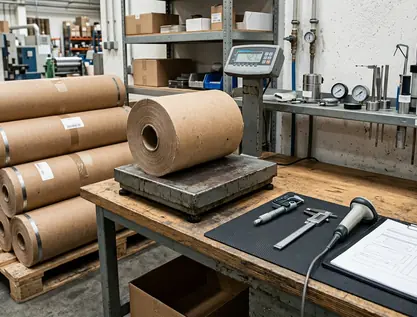
Incoming inspection, AQL or skip-lot, runs against the characteristics that actually stop the filler. Neck finish. Gram weight. COF. Barcode grade. I do not inspect every line on the drawing at the dock. That theatre burns hours and still misses the neck that jams the capper.
When a lot fails at the filler, I run a joint 8D with a named owner for converting, filling, and storage. Root cause defaults to whoever is holding the pallet unless those three names are already on the form. The 8D clock is customarily a 48-hour initial response and 14-day root cause identification. Storage belongs in the 8D because a film coil held outside its climate band can look like a converting defect at the sealer.
Spec control sits inside ISO 9001 quality management systems. ISO 9000 vocabulary helps when the buyer’s quality system and the converter’s system need a shared language for CAPA and document control.
Standing dossiers of declarations of compliance and migration files apply strictly to food-contact and personal-care packaging placed on the EU market. Industrial wraps and tertiary stretch films do not require this specific regulatory file discipline. I keep that file set off the stretch-film SKUs so the quality team is not chasing declarations the regulation never asked for.
Stage-Gates, Dock Windows, Named Call Trees
I reserve converter engineering hours and a stage-gate inside the partnership: concept, line trial, first bulk. New formats do not jump the queue of running SKUs. If co-development has no reserved hours, the next format will cannibalise the technical account team that is supposed to be ageing CAPAs from the quarterly review.
The stage-gate also protects the freeze. A line trial that lands inside a printed-film freeze steals plate time from a live SKU. I book the trial against the reserved hours, not against the call-off calendar.

Logistics SLAs have to be things packaging engineers actually feel. Dock booking windows. Pallet pattern. Max stack height. Humidity and temperature for film and paperboard. A freight Incoterm does not keep a coil of film in spec once it sits in the wrong bay. In professional practice I set storage for film and paperboard between 18°C and 22°C at 45% to 55% relative humidity, and I write stack height next to the pallet pattern so warehouse teams are not guessing.
Two-Tier After Dark
A partnership without a two-tier escalation map fails at 2 a.m. when a line is down. Name shift lead to technical account to plant director. Fifteen minutes for a line stop. Twenty-four hours for slow quality drift.
I keep the clock times on a card at the filler, not in a shared drive nobody opens on nights.
Packaging Partnership Escalation Matrix| Trigger Event | Clock Time | Tier 1 (First Call) | Tier 2 (Escalation) | Decision Authority |
|---|---|---|---|---|
| Hard Line Stop (Filler Jam/Breakage) | 15 minutes | Shift Lead → Converter Tech Support | Plant Director → Converter Plant Director | Restart or lot hold |
| Slow Quality Drift | 24 hours | Technical Account | Plant Director | CAPA or watch |
The 15-minute line-stop SLA and the 24-hour drift SLA use the same two-tier map. Only the clock changes. That is the point of writing both on one card.
Run The Four-Lever Test This Week
I fold the four levers into a single test you can run on an existing converter this week.
Named owners. Freeze window. Spec and CAPA file. Escalation card.
Walk the lot file and the night-shift phone list. If a name, a freeze, a CAPA owner, or a clock time is missing, you already know how the next disruption will be handled.
Give concurrent resin, print, and volume changes a 90-day evaluation period against those four levers. If any lever is missing, the next resin swap, print revision, or volume swing will be handled as a spot buy even if a multi-year contract is on file.
If this converter had to absorb a resin change, a print-spec revision and a sudden volume swing in the same quarter, which named owner would you call first?